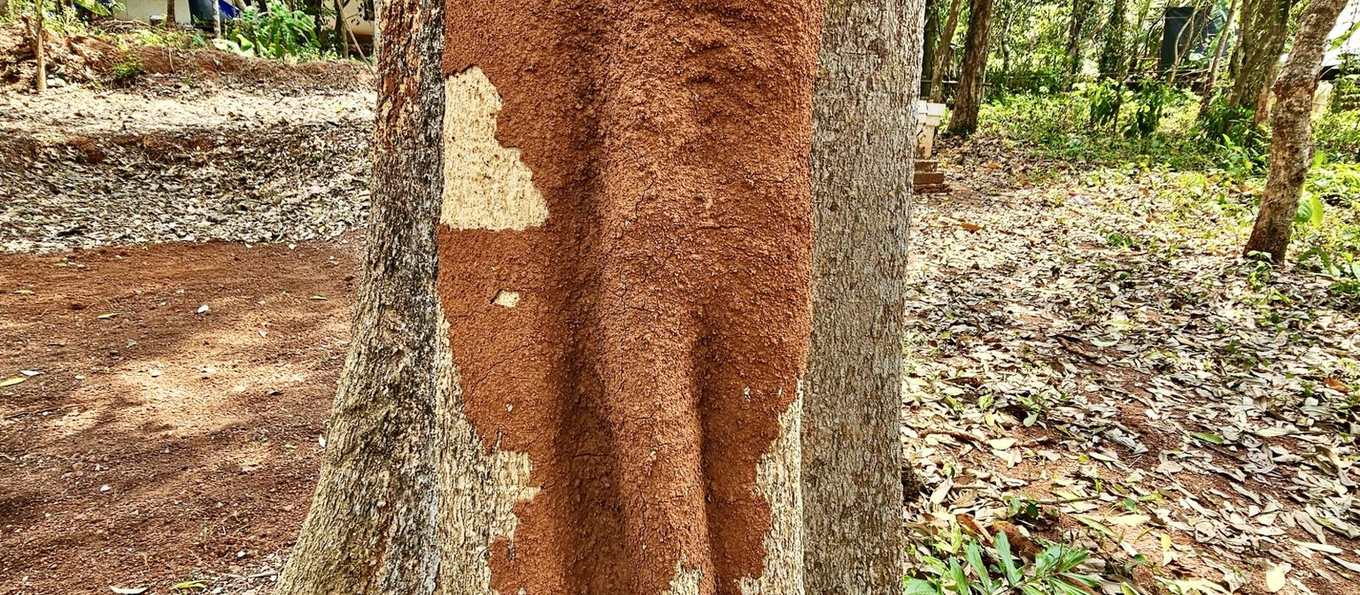
Termites
Termite Treatment in Newark, NJ
The Eastern subterranean termite works quietly through Newark’s old wood-frame housing, coming up from the soil into sills and joists most owners never inspect.
Termite treatment in Newark is about one insect, the Eastern subterranean termite, the species that causes nearly all structural termite damage in New Jersey. It lives in the soil, builds mud tubes up the foundation, and feeds on the wood framing of a house from the inside out. Newark’s deep stock of old wood-frame and brick homes, many with wood sills close to grade, gives it exactly the conditions it needs.
Why old Newark housing is at risk
The Eastern subterranean termite nests in the ground and needs moisture and wood contact. In a Newark house it finds both. Many of the city’s homes are a century old, framed in wood, sitting on rubble-stone or early poured foundations, with sill plates and floor joists not far above damp soil. Add a wet basement, a downspout that dumps at the foundation, or mulch and soil piled against the wall, and the termites have a moist highway from the ground into the structure.
Because subterranean termites travel inside mud tubes and inside the wood, the damage is usually well underway before anyone notices. In a row of attached houses the risk can run down the block, since the soil, the shared walls and the moisture conditions are similar from address to address.
The warning signs, and why they get missed
Subterranean termites work from the soil up and from the inside out, so a homeowner usually sees nothing until a swarm or a probe reveals it. The swarm is the clearest warning the insect gives, and it happens on warm spring days, often after rain, when winged reproductives leave an established colony. A swarm at or near the house means a mature colony is already present.
- Pencil-width mud tubes running up the inside of a foundation wall, a pier, or a basement corner
- A spring swarm of winged termites indoors, or a scatter of identical shed wings on a sill or in a web
- Wood that sounds hollow when tapped along a sill, a joist, or a basement door frame
- Blistered or rippled paint, or a soft spot, on wood near a damp wall
- Mud tubes, not sawdust, are the subterranean termite sign; shavings point to carpenter ants instead
How a local exterminator treats termites here
The inspection is the real work. An experienced local exterminator walks the basement and crawl, the sill line, the foundation, the pipe penetrations and the areas where wood meets soil, looking for tubes, damage and the moisture feeding them. In a Newark house the usual entry routes are the cracks in an old foundation, the gap where utilities pass through the wall, the wood that sits too close to grade, and the wet corner of the basement.
Two treatment approaches lead. A liquid termiticide creates a continuous treated zone in the soil around the foundation, so foraging termites pick it up and carry it back to the colony. A bait system sets in-ground stations that the colony feeds on and shares, eliminating it over time and then monitoring for re-invasion. Alongside either, the moisture gets corrected, the downspouts, the grading, the wood-to-soil contact, because a subterranean termite treatment without the moisture fix is a treatment you repeat.
Home sales, WDI reports, and timing
Many Newark termite discoveries happen during a home sale, when an inspector completes the wood-destroying-insect report that buyers and lenders ask for. Finding active termites at that stage turns a manageable pest issue into a negotiation and repair problem on a deadline.
Termites are the one pest where the cheapest time to act is always now. Calling when you see a tube or a swarm costs a treatment. Waiting until an inspector finds the damage costs a treatment plus repairs plus a weaker hand at the closing table. On a century-old frame house, that difference is real money.
Read more on What pest control costs in Newark and why, or call 973-548-0440 and describe what you are seeing.
Related
People who called about this also called about
Questions
Termites in Newark, answered
How do I know if I have subterranean termites?
The clearest signs are pencil-width mud tubes on the foundation and a spring swarm of winged termites or their shed wings indoors. Hollow-sounding wood along a sill or joist is another. A local exterminator confirms it with an inspection, since the insect works out of sight.
Are termite treatments safe around my family?
Modern termiticides and bait systems are applied to the soil and the structure, not broadcast through living space. Ask the exterminator for the product label and the re-entry interval, and follow any preparation instructions you are given.
How long does termite treatment last?
A properly installed liquid termiticide zone protects for several years, and a monitored bait system continues as long as it is serviced. Both depend on the treated zone staying intact and on fixing the moisture that drew the termites in the first place.
I saw a swarm once and it stopped. Am I fine?
No. A swarm means a mature colony is sending out reproductives, so the colony is established on or near the house. The swarm ending just means that batch died off, which they always do. The colony is still in the soil and still feeding.
Call now
Tell us what you are seeing, and where
Describe the pest, the building and how long it has been going on. You get straight answers and an honest estimate before any work starts. No obligation.
Calls answered 7am to 9pm, seven days a week